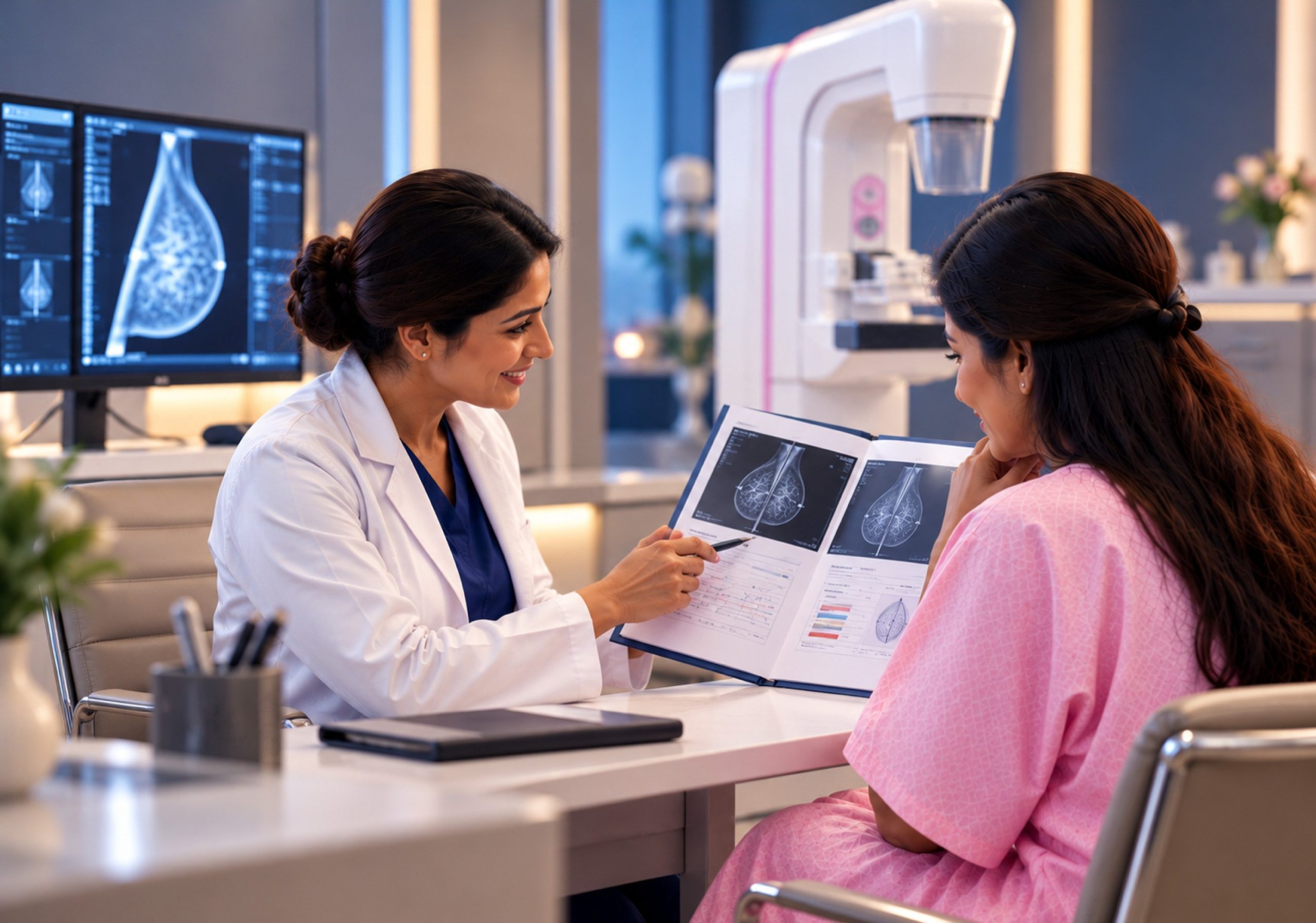
If you’re approaching your first mammogram, a little nervousness is completely normal. The good news is that the procedure is quick, well-understood, and one of the most effective tools we have for detecting breast cancer early, often years before a lump can be felt. At Medeor Hospital Dubai, our goal is to make your first screening comfortable, informed, and stress-free.
Why Mammograms Matter
A mammogram is a low-dose X-ray of the breast that can detect changes such as tiny calcifications, cysts, or masses long before symptoms appear. Breast cancer is among the most common cancers affecting women in the UAE, and early detection significantly improves treatment outcomes and survival rates. Regular screening is one of the most powerful steps you can take for your long-term health.
When Should You Have Your First Mammogram?
Guidelines vary slightly, but most recommend that women at average risk begin routine screening at around age 40 to 45. In the UAE, health authorities encourage regular screening from age 40. You may need to start earlier if you have:
- A family history of breast or ovarian cancer
- A known BRCA1 or BRCA2 gene mutation
- Previous chest radiation therapy
- A personal history of breast conditions
Your doctor can help you decide the right starting point based on your individual risk profile.
How to Prepare for Your First Mammogram
A little preparation helps ensure clear images and a smoother appointment.
- Schedule at the right time. If you still have periods, book your mammogram one week after your period ends, when breasts are least tender.
- Skip certain products. On the day of your exam, avoid deodorant, antiperspirant, powders, lotions, or perfumes on your chest and underarms. These can show up as white spots on the images.
- Wear a two-piece outfit. You’ll need to undress from the waist up, so a top and skirt or trousers is more convenient than a dress.
- Share your history. Bring details of any previous breast imaging, surgeries, hormone therapy use, or family history. Mention if you are pregnant, may be pregnant, or are breastfeeding.
- Consider pain relief. If you’re sensitive, ask your doctor whether taking a mild over-the-counter pain reliever beforehand is suitable for you.
What to Expect During the Procedure
The entire appointment usually takes about 20 to 30 minutes, with the imaging itself lasting only a few minutes.
- Check-in and consultation: A member of our team will confirm your details and answer any questions.
- Changing: You’ll be given a gown and a private space to change.
- Positioning: A trained female technologist will position one breast at a time on the mammography unit.
- Compression: The breast is gently compressed between two plates for a few seconds. This spreads the tissue, so images are clearer and the radiation dose stays as low as possible.
- Imaging: Images are taken from at least two angles for each breast.
You may feel pressure or brief discomfort, but it should not be painful. Tell the technologist if you need a pause or adjustment.
Understanding Your Results
A radiologist reviews your images and compares them with any previous exams. Most results are normal. If something needs a closer look, you may be called back for additional views or an ultrasound. A callback does not mean you have cancer; in most cases, it turns out to be benign tissue or a cyst. Your doctor will explain your results clearly and guide you on the next steps.
Frequently Asked Questions
Most women feel pressure or mild discomfort for a few seconds. It is generally well tolerated, and scheduling after your period can reduce sensitivity.
Yes. Mammograms use a very low dose of radiation, comparable to what you naturally absorb from the environment over a few months.
For most women, screening is recommended every one to two years, depending on age and risk factors. Your doctor will recommend the schedule that suits you.
Yes. Inform the technologist beforehand so additional views can be taken to ensure accurate imaging.
Dense tissue can make mammograms harder to read. Your doctor may suggest supplementary imaging such as ultrasound or MRI.
Timelines vary, but our team will inform you when to expect your report and discuss it with you.
Conclusion
Your first mammogram is a simple, proactive step toward protecting your health. With a little preparation and knowing what to expect, the experience can be quick and reassuring. Early detection saves lives, and regular screening gives you the best chance of catching any changes at their earliest, most treatable stage.